
This is the suggested answer to the Activity-Based Costing exercise on Colorado Ricardo Mountain Bikes.
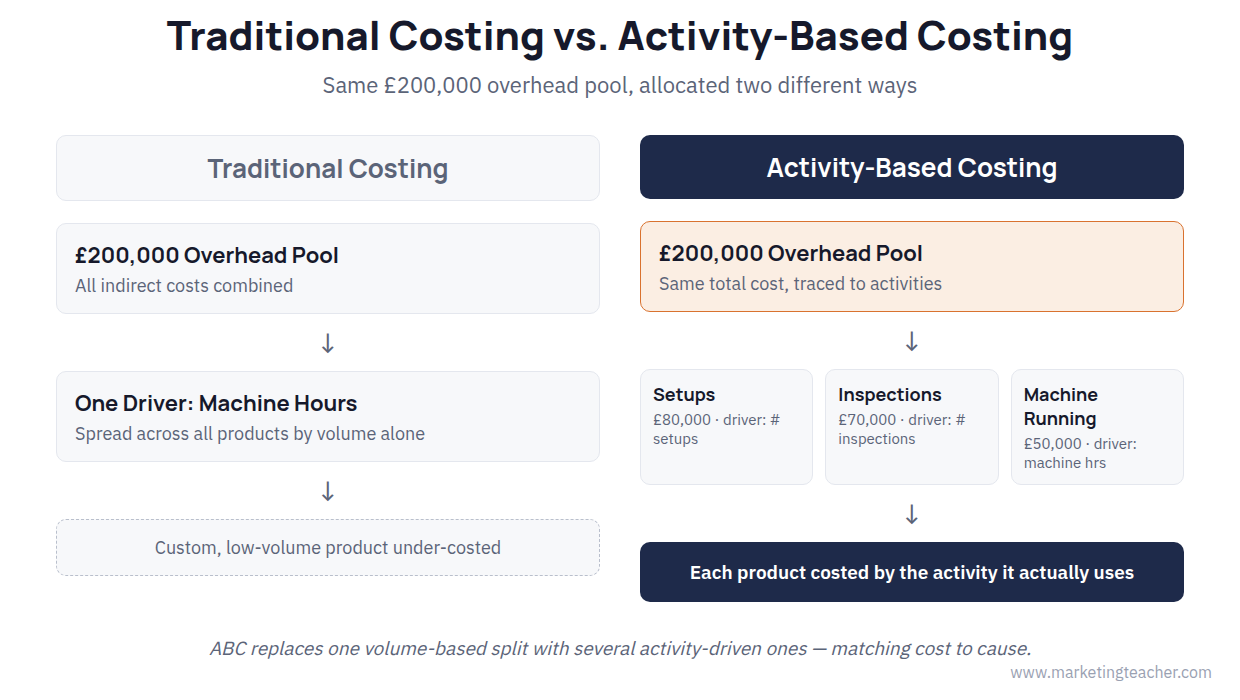
Why a Flat Rate Understates the E-Bike’s True Cost
Spreading the $150 overhead evenly assumes every bike consumes the same amount of supporting activity. The e-mountain bike does not: it needs extra quality inspections for battery safety and more frequent machine setups because it is built in smaller batches. A flat per-unit rate hides this and would make the e-mountain bike look more profitable than it really is.
How Activity-Based Costing Allocates Differently
ABC first identifies the activities driving overhead – machine setups, quality inspections, order processing – and then assigns cost based on how much of each activity a product actually uses. Because the e-mountain bike triggers more setups and inspections per unit than the standard off-road bike, ABC would assign it a higher share of overhead per unit, giving a more accurate picture of its true production cost.
Getting this right matters directly for the Product Development decision explored in the Ansoff’s Matrix exercise – Ricardo needs an accurate cost picture before pricing the e-mountain bike.
The slides, worksheet, lesson plan and poster for this lesson are free to download and free to use in your course — no sign-up, no permission needed.

